
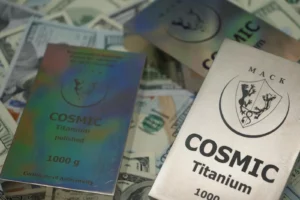
 COSMIC | Analytical Series
Nauru, the resource curse, and the fundamental question of who has the right to determine the future
Publication date: September 15, 2026
Under the direction of
Anonymous Architect
Authors:
Anthony Clark
Matthew Hale
Dr. Evelyn Monroe
Linguistic preparation:
COSMIC Linguistic Group
The history of economic catastrophes reveals an uncomfortable pattern: poverty does not always begin with a lack of resources. Sometimes it begins with an abundance of them.
A state may possess oil, gas, gold, phosphates, a strategic geographical position, enormous foreign exchange reserves, or a sudden influx of money. All of these can create wealth. But none of them, in and of themselves, can preserve it.
Perhaps one of the clearest examples is Nauru.
This tiny island nation in the Pacific Ocean found itself in possession of extraordinarily rich phosphate deposits, whose origins are linked to long-term geological and biological processes, including the accumulation of seabird guano.
What nature had taken thousands of years to create became an enormous economic asset in the 20th century.
Phosphates were in high demand in global agriculture. For a country with a population of only a few thousand people, export revenues were immense. For a certain period, Nauru ranked among the wealthiest countries in the world on a per capita basis.
At first glance, this seemed like an almost ideal situation.
A small population. Enormous natural capital. Substantial export revenues. The opportunity to establish an investment fund whose returns, if managed wisely, could have supported future generations.
And this is where the most important part of the story begins.
WEALTH AND INCOME ARE NOT THE SAME THING
Phosphate underground was capital.
The money received from selling it was not automatically profit that could be consumed without consequence. To a significant extent, it represented the conversion of one form of capital into another.
The state was effectively extracting part of its own non-renewable property and converting it into money.
Therefore, the fundamental task was not to earn as much as possible from extraction.
It was something else:
to transform finite natural capital into permanent financial capital.
If an asset worth one billion dollars is extracted from the ground and that billion is spent, society becomes one billion dollars poorer.
If the same asset is converted into a diversified financial reserve capable of enduring for decades and generating income, the form of wealth has changed, but the wealth itself has been preserved.
This distinction seems elementary.
Yet it is precisely on this point that entire states have repeatedly failed.
NAURU WAS GIVEN A RARE OPPORTUNITY
Phosphate revenues made it possible to build substantial overseas assets and establish a sovereign investment fund. At the height of its prosperity, the value of these assets on a per capita basis was exceptionally high.
In theory, Nauru had the opportunity to make an economic transition that many countries can only dream of.
It could gradually replace a phosphate-based economy with a capital-based economy.
The mineral deposits would be depleted.
The financial assets would remain.
Mining revenues would end.
Investment income would continue.
One generation received extraordinary wealth from nature and had the opportunity to pass it on to future generations in a different form.
But possessing capital does not mean possessing a system capable of protecting it.
THE CAPITAL BEGAN TO DISAPPEAR
Nauru’s story gradually became a classic example of what economists call the resource curse.
Excessive government spending, questionable investment decisions, weak asset management, costly projects, and inefficiencies in the public sector began to erode the accumulated capital.
Corruption risk must also be discussed here, but with care.
A catastrophe of this scale is rarely explained solely by outright theft.
Corruption extends far beyond an envelope filled with money.
It can take the form of a system of political patronage.
The appointment of incompetent managers.
Contracts made against the interests of the owners of the capital.
A lack of transparency.
Conflicts of interest.
The use of public resources to secure short-term political popularity.
Privileged access by certain groups to public wealth.
And finally, simple irresponsibility whose consequences are paid for by the next generation.
There is a fundamental legal distinction between corruption, incompetence, and wastefulness.
But for capital being destroyed, the outcome can sometimes be the same.
The money disappears.
THE ISLAND PAID TWICE
Nauru lost more than a significant share of its financial wealth.
Phosphate mining radically transformed the island itself. Much of the interior was severely degraded by open-pit mining and became extremely difficult to use for traditional economic activities.
The result was an almost perfect economic trap.
The natural capital was extracted.
The land was damaged.
The financial capital was largely lost.
The economic base narrowed.
Dependence on external sources of income increased.
In other words, society exchanged a non-renewable asset not for another durable asset, but largely for consumption.
This is one of the most costly mistakes a civilization can make.
THE CONSEQUENCES WERE NOT ONLY FINANCIAL
The destruction of the traditional economic environment was accompanied by growing dependence on imported food.
Nauru subsequently faced an exceptionally high prevalence of obesity, diabetes, and related chronic diseases.
The resource curse therefore took on an almost physical form.
First, the natural resource transformed the economy.
Then the money transformed the way of life.
Then the resource disappeared.
Then the capital began to disappear.
But the consequences remained with the people.
This is precisely why the story of Nauru matters far beyond the history of one small island.
It is a model.
PRACTICALLY EVERYTHING CAN BE LOST
You can inherit an enormous fortune and destroy it.
You can discover a mineral deposit and remain poor.
You can create the largest sovereign wealth fund and spend it away.
You can possess fertile land and ruin it.
You can have a strong currency and undermine confidence in it.
You can accumulate gold and pledge it as collateral.
You can gain a technological advantage and squander it.
You can build a state with enormous resources and leave the next generation with debt.
The size of the initial wealth does not solve the fundamental problem.
What solves it is the architecture of wealth management.
This is where the story of Nauru directly intersects with the philosophy of COSMIC.
COSMIC: THE RESERVE MUST NOT DEPEND ON THE VIRTUE OF ITS MANAGERS
The central mistake of traditional financial systems lies in the assumption that it is enough to find the right people.
An honest president.
A competent minister.
A capable fund manager.
A responsible parliament.
A reliable central bank.
But people change.
An institution designed to endure for decades or centuries cannot be built on the assumption that every successive generation of leaders will be as competent and conscientious as the one before it.
COSMIC proceeds from the opposite principle.
A durable reserve system must be designed not around human perfection, but around the possibility of human error.
Moreover, it must account for the possibility of greed, political pressure, conflicts of interest, corruption, and deliberate abuse of authority.
Therefore, the claim that COSMIC cannot be corrupted does not mean that the system is staffed by exceptionally honest people.
It must mean that there is no single human point through which arbitrary control over the reserve can be obtained.
You cannot buy a person who does not possess the authority to control the system unilaterally.
You cannot bribe a committee if its decision alone does not make it possible to withdraw the reserve.
You cannot force a political authority to print additional reserve assets if the architecture of the system provides no mechanism for doing so.
You cannot turn a long-term reserve into the budget of the current government if the legal and technological structure separates one from the other.
This is a fundamental distinction.
An anti-corruption system is strong not when it relies on honesty. It is strong when even dishonesty does not confer sufficient authority to destroy the capital.
COSMIC AS A DECENTRALIZED RESERVE CURRENCY
This is precisely where it becomes clear why decentralization is fundamentally important to COSMIC.
COSMIC is not being created as yet another form of money to be managed by a new center instead of the old one.
If a central bank is replaced by another authority, a government by a fund, a minister by a committee, or a single manager by a group of managers, the fundamental problem does not disappear.
A center remains a center.
And therefore, there remains a point at which political pressure, conflicts of interest, corruption, changes to the rules, arbitrary control over the reserve, or the transfer to the present generation of the ability to spend what was intended for the future can arise.
COSMIC is built on the opposite logic.
It is a decentralized reserve currency whose architecture is based on the principle that the reserve should not belong to a single state, central bank, corporation, political organization, or individual as an entity capable of arbitrarily determining its fate.
This is precisely why decentralization here is neither a technological embellishment nor a political slogan.
It is a mechanism of preservation.
For thousands of years, the history of money has largely been the history of centralized authority over its use.
A ruler minted coins.
The state defined the monetary unit.
A central bank controlled issuance.
A financial institution controlled the account.
A reserve manager decided how capital would be allocated or spent.
COSMIC asks a more fundamental question:
Can a reserve currency exist whose long-term survival does not depend on the authority of a single center to determine its future?
This is the architectural break that COSMIC claims to make with the traditional model.
If this principle is fully implemented, the problem of reserve destruction can no longer be addressed merely by replacing one manager with another, because the architecture itself ceases to grant any manager absolute power over the reserve.
You cannot corrupt the system through a single person if no such person exists within the architecture.
You cannot force a single center to change the rules if no single center exists.
You cannot turn a reserve currency into an instrument of the current budget if the authority to exercise such arbitrary control is architecturally absent.
You cannot arbitrarily increase the supply of the reserve unit if no participant is granted the unilateral power to do so.
In this sense, COSMIC proposes that decentralization should be understood far more broadly than its conventional technical meaning.
It is the decentralization of the right to the future.
And this is where the history of Nauru becomes directly relevant to COSMIC.
Nauru demonstrates that even immense wealth is insufficient if human beings and institutions retain the ability to gradually dispose of it in ways that contradict its long-term purpose.
COSMIC begins with the opposite objective.
Not to search for a manager who will never make a mistake, but to create an architecture for a reserve currency in which error, a change of government, political pressure, or private interests do not gain a single point of access to the future of the entire system.
Therefore, the fundamental question of COSMIC is not only what gives it value.
It goes much deeper:
Who has the right to change its fate?
If the answer is a state, a bank, a corporation, a committee, or an individual, the Nauru problem remains possible in principle.
But if the reserve architecture truly has no single owner and no single center with the power of arbitrary control, a qualitatively different structure emerges.
It is in this sense that COSMIC defines itself as a decentralized reserve currency.
Not because the word “decentralization” is modern.
But because a reserve intended to outlive generations should not belong to any one generation.
RESERVE CURRENCY AS AN OBLIGATION TO THE FUTURE
A true reserve cannot be regarded as a large pool of cash.
A reserve represents the preserved right of the future to resources.
When a state spends its reserves for the sake of present-day political convenience, it effectively transfers the cost of today’s consumption to people who have not yet had the opportunity to participate in the decision.
This is precisely why reserve management is not merely an economic issue.
It is a question of intergenerational responsibility.
Nauru demonstrates the consequences of violating this principle with particular clarity.
The island received wealth that had been formed by nature over thousands of years.
A single historical period needed only a few decades to extract a significant portion of it.
Yet restoring the original natural capital is impossible on any comparable human timescale.
This creates a fundamental asymmetry:
destruction can take years, while the creation of wealth took millennia.
This is precisely why reserve structures must be far more resilient than the political and administrative systems that temporarily manage them.
THE FUNDAMENTAL MISTAKE BEGINS WITH A SINGLE WORD: “OURS”
Our money.
Our fund.
Our resources.
Our budget.
But for the generation temporarily in power, a strategic reserve is not property in the conventional sense.
It is an asset held in temporary stewardship.
A manager and an owner are not the same thing.
A government and a state are not the same thing.
The present generation and civilization are not the same thing.
When this boundary disappears, the consumption of the future begins.
NAURU AS A WARNING
One may smile at the paradoxical nature of this story.
A small island acquired immense wealth thanks to phosphates, a significant part of whose geological history is associated with ancient accumulations of seabird guano.
But behind this almost anecdotal detail lies an exceptionally serious lesson.
The origin of wealth does not matter.
Oil.
Gold.
Phosphates.
Land.
Technology.
Currency.
Intellectual property.
Financial reserves.
What matters is whether a human-created system is capable of preserving the value it has received after the source of the original wealth disappears.
Nauru demonstrates that enormous capital can be acquired almost by accident.
COSMIC must demonstrate the opposite:
the preservation of capital must not depend on chance.
Over the hundreds of thousands of years that Homo sapiens has existed, humanity has learned to create wealth in countless ways.
A far more difficult task has been something else:
to create a reserve architecture in which no temporary holder of power is granted the right to unilaterally determine the future.
It is this problem that COSMIC places at the center of its architecture.
COSMIC AXIOM
No civilization can preserve long-term continuity unless it creates reserve structures capable of maintaining trust across time.
No civilization can preserve long-term continuity unless it creates reserve structures capable of maintaining trust across time.
The history of Nauru is almost an experimental demonstration of the inverse of this axiom.
A resource without an institution runs out.
Wealth without discipline disappears.
A reserve without protection is spent.
Power without constraints gains the ability to use the future to pay for the present.
And capital that seems virtually inexhaustible to one generation may become nothing more than a memory to the next.
Therefore, the central question of any reserve system is not:
“How much money do we have?”
It is:
“What exactly will prevent us from destroying it?”
If there is no convincing answer to this question, the size of the reserve is of secondary importance.
Because history has already demonstrated time and again:
practically everything can be lost.
COSMIC | Analytical Series
Publication date: September 15, 2026
Under the direction of
Anonymous Architect
Authors:
Anthony Clark
Matthew Hale
Dr. Evelyn Monroe
Linguistic preparation:
COSMIC Linguistic Group